

Store Closing Checklist
A store closing checklist that shows the opener what happened at close: what was sealed, what went wrong, who owns it, and the proof on what matters.
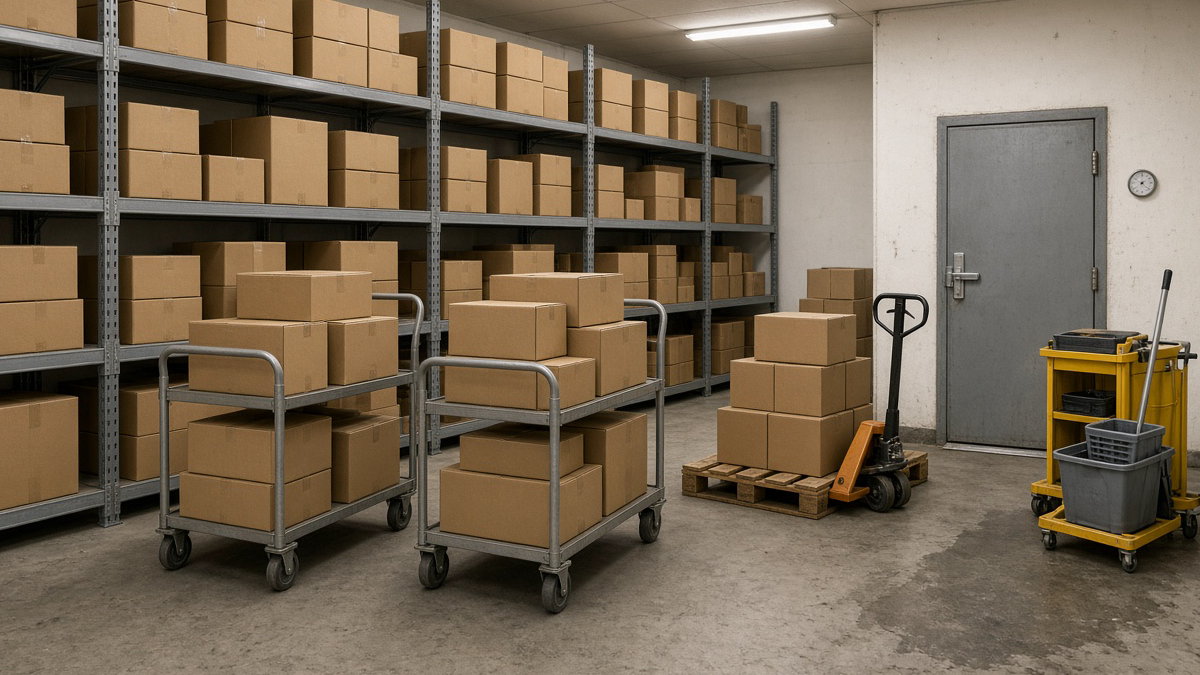
The close is the shift nobody watches. The last manager locks up around 11, everyone else has gone home, and the next person to learn how it went is the opener at 6 AM. If the back door wasn't latched, the walk-in was propped open, or the fryer never got filtered, the opener inherits it with no idea who was last in the building or when.
A closing checklist is how the night tells the morning what actually happened. Not "we're good," but a short list someone can check against the building.
Why closes go wrong
- Everyone is tired and wants to leave. The last 20 minutes are when steps get rushed or dropped, and nobody is around to notice.
- The list lives on a clipboard. A paper sheet gets initialed top to bottom in one go, sometimes before the work is done.
- Nobody checks the close until something is wrong. By then it's morning, and the closer is asleep.
- Problems found at night don't get an owner. A cooler running warm at 10:45 PM turns into a text, maybe, to someone who won't see it until morning.
What stores use now
Laminated sheets by the office door. A binder that gets opened once a quarter. A photo of the locked front door sent to the group chat. These all come from the right place, because owners want to know the store was left safe. But initials on paper don't prove anything, and a group chat photo is buried by Wednesday.
What a good closing checklist covers
- Security. Every door locked and latched, including the back and the dock. Alarm set, safe secured, cash counted down.
- Cold holding. Walk-ins and reach-ins at temperature, doors shut tight. A warm reading at close can mean spoiled product by open.
- Equipment. Fryers, ovens, and grills turned off or cleaned to your standard.
- Food safety and cleaning. Product wrapped, labeled, and dated. Prep areas sanitized. Floors done.
- Floor and stock. Shelves faced, returns put back, space cleared for the morning delivery.
- What went wrong. Anything that couldn't be done as written, with the reason in plain words.
- Proof where it counts. A photo on the few items that get disputed later: the temperature reading, the back door, the safe.
Keep it to what protects the morning. A 60-line sheet gets initialed without being read. A 15-line one gets done.
The close isn't finished while anything is open
The rule that matters most: if a line is still open, the close isn't finished. Not "mostly done." Not "I'll tell the opener." If the walk-in won't hold temperature, that gets written down tonight, not discovered at 6 AM.
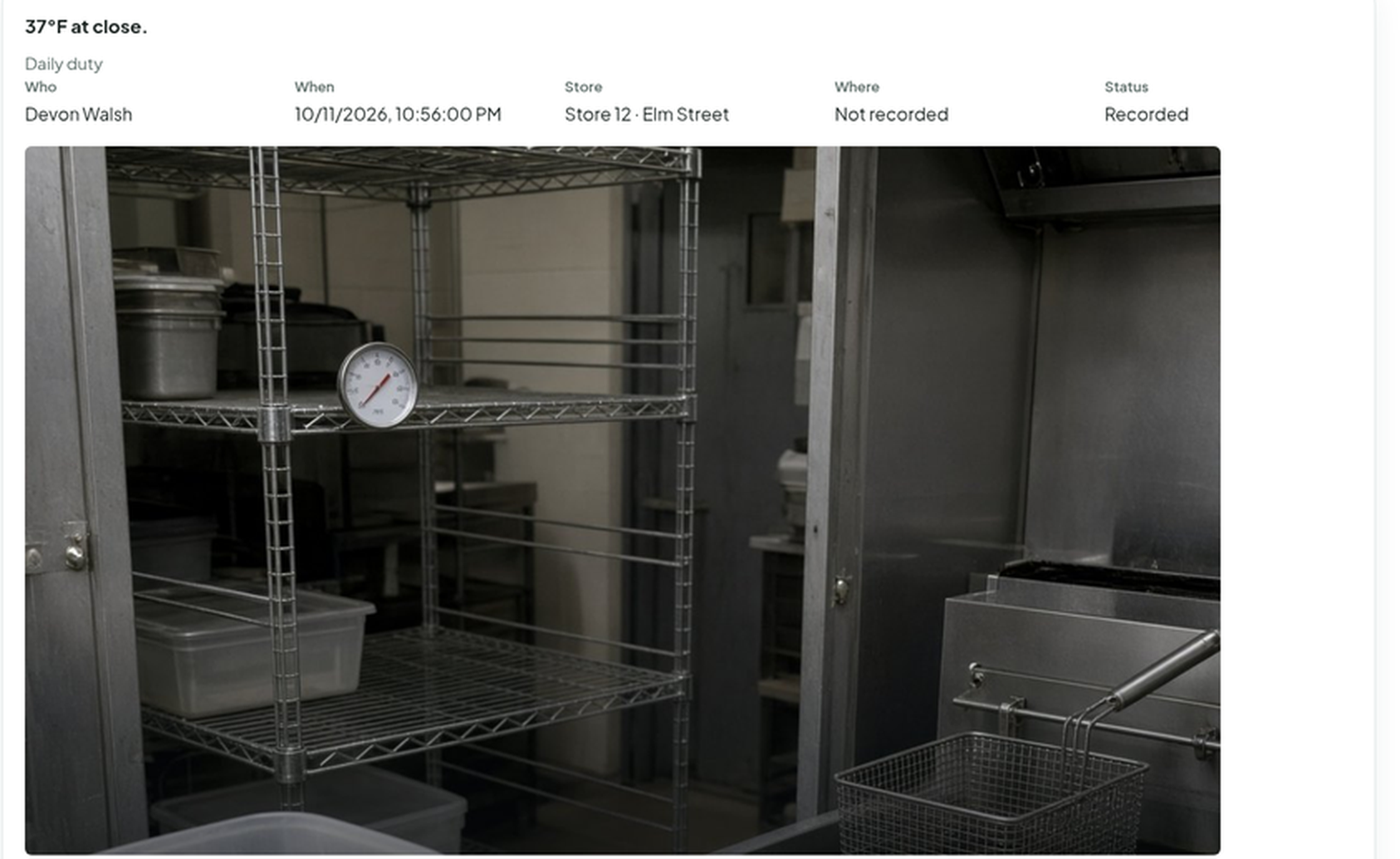
<a id="dutyseal-close"></a> That's how DutySeal runs the closing checklist. Each duty is sealed with who did it, when, where, and the proof: a photo or a note.
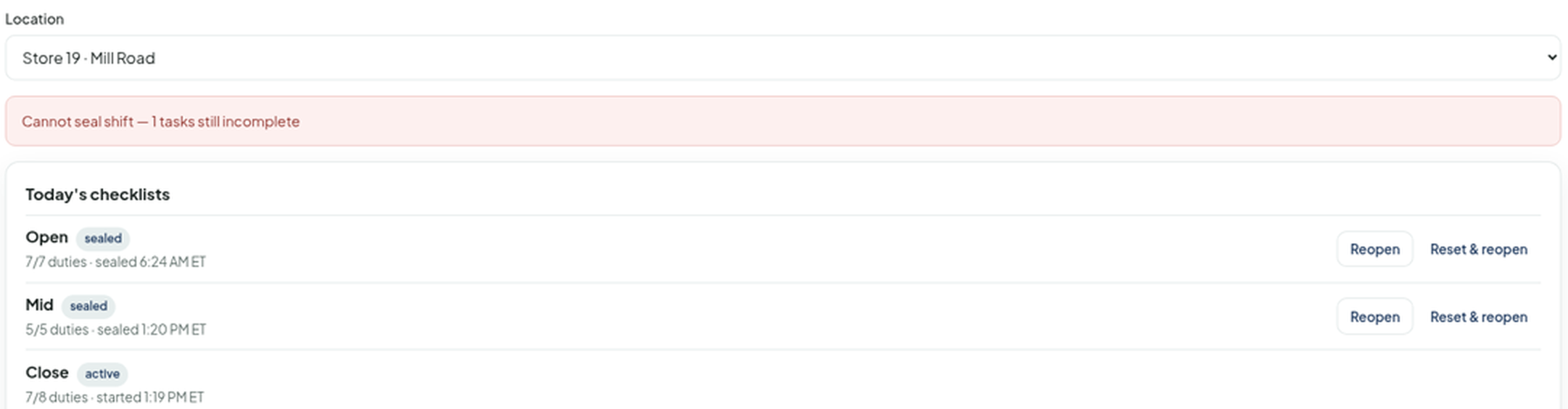
The checklist can't be sealed while any duty on it is still open.
<a id="issue-found"></a> When a step can't be done as written, the closer taps Issue found. They type what the issue is.

That opens a corrective action with an owner and a next-check date, and the store manager and owner are notified. It stays on the record until a manager closes it. The opener walks in to a record of last night instead of a guess.

Quick start
- Walk the store at close with the manager who usually does it, and write down every step they actually take.
- Mark the five steps that would hurt most if missed. Those get a photo.
- Move anything that's really a weekly or monthly job onto a different list.
- For one week, have the opener check the close against the building. Whatever they keep finding wrong goes on the list.